

DVFA Monthly Question: DVFA Investment Professionals see political analysis as more important in research
The latest DVFA monthly question is once again addressed to the more than 1,400 members of the association and is dedicated this month to the topics of political research, ESG analyses and geoeconomics.

EY Study: Real Estate Asset Managers are challenged as never before
ESG is the biggest challenge facing real estate asset managers, according to the current Asset Management Study 2023 by EY Real Estate. In this article you will find an overview of the most important results.

Banking Trend Radar, Part 3: Focus on technology and corporate organisation
Banking in transition: technology trends, new experiences and security measures – The Banking Trend Radar reveals what banks need for sustainable success.

How start-ups can manage uncertain times: Insights from leading European venture capitalists
Start-ups are shifting their focus from fast-paced growth toward sustainable economics amid global headwinds. Four prominent European venture capitalists discuss how founders and funders can play the long game.

News on the AI Act: The way to the trialogue is open
The latest Insights article from our member Taylor Wessing highlights the key changes to the Commission’s draft Artificial Intelligence Act, or AI Act.

DVFA Monthly Question: Digital assets in the financial industry between disruption and innovation
In the latest edition of the DVFA monthly question, the association’s 1,400 members were asked about the topics of digital assets and blockchain. Will the digital euro prevail? How do they assess the risk of money laundering? You can read the answers to these and other questions here.

Deutsche Bank Research: Launch of new topic page on AI
Due to the current relevance of the topic, Deutsche Bank Research only recently launched a topic page on “Artificial Intelligence”, which will be regularly updated with reports and analyses on the topic.

Web3 Experiments Start to Take Hold in Banking
Can incumbent banks avoid being replaced by faster, newer competitors providing better customer experiences? The experts from FMF member Bain & Company answer this question in this article.
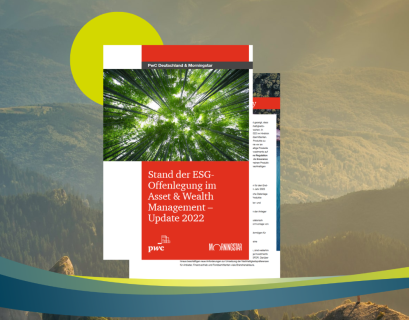
Study: Sustainable funds barely transparent
The new white paper by FMF member PwC in cooperation with Morningstar shows that the inconsistent data situation makes it difficult to compare sustainable funds and investment decisions.

Contrasting sentiment among financial institutions and service providers keeps CFS Index at unchanged level
Sentiment in the financial sector has shown contrasting trends in the first quarter of 2023. However, the CFS Index, which measures the business climate of the German financial sector on a quarterly basis, remains virtually unchanged at 107.9 points, just +0.1 points up on the previous quarter. Sentiment among the financial institutions deteriorated by -4.0 points, whereas it improved by +4.2 points among the service providers.


