
‘The immediate future of wealth management will be shaped by three pillars: automation, greater connectivity and data-driven advice,’ explains Paul Kammerer, CCO and Co-CEO of Fincite. ‘The dynamics have changed significantly within a year. The driver of this change is the new, digitally savvy generation of heirs and wealthy individuals, who approach financial service providers with completely different expectations.’ – Paul Kammerer, CCO and Co-CEO of Fincite.
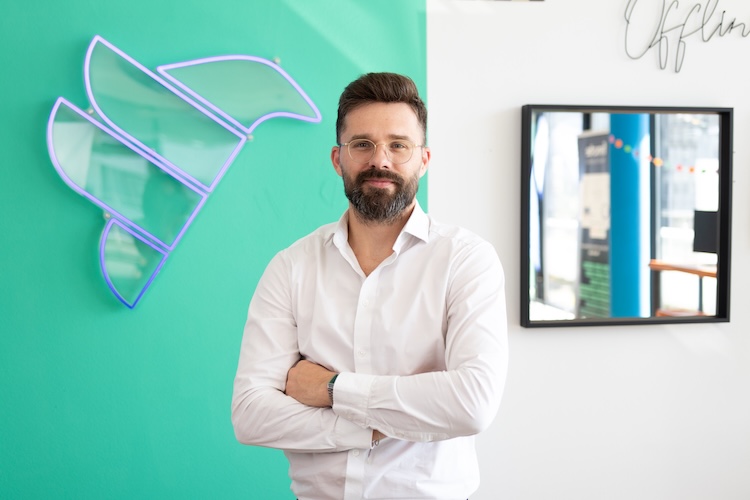
Paul Kammerer, CCO and Co-CEO of Fincite
The ‘digital’ supply gap for wealthy private clients
“The impending wealth shift poses new challenges for banks, asset managers and advisors. ‘We are facing a gigantic transfer of wealth: according to estimates, assets worth 18.3 trillion US dollars will be inherited worldwide by 2030, 3.5 trillion US dollars of which will be in Europe,’ explains co-author Sebastian Ahlhorn, Global Head of UHNWI & Family Offices at Commerzbank AG.

Sebastian Ahlhorn, Global Head of UHNWI & Family Offices at Commerzbank AG
Despite digitalisation, one customer group remains underserved: individuals with assets in the low seven-figure range. They lack access to high-quality financial planning tools and personalised advice. Banks and fintech companies have an opportunity here to implement scalable solutions that combine tailored support with efficient technology.
Five key trends transforming wealth management
Generational change: the new generation of investors demands digital control
While previous generations placed a high degree of trust in their personal advisors, today’s digitally savvy investors expect transparent, flexible and scalable solutions. They are increasingly turning to digital platforms that combine self-service functions with individual advice and use AI-supported tools.
Michael Zwiefler, General Manager, Financial Services, Microsoft, sees a wide range of prospects for the use of AI: “Artificial intelligence is more than just a technical gimmick: it is becoming a core competence for banks and wealth managers.
Interactive, tailor-made financial planning replaces standard solutions
Individual investment strategies and interactive interfaces for real-time advice are becoming increasingly important. Customers don’t just want to receive investment products; they want to be interactively involved in the decision-making process. They want to run through scenarios independently and actively manage their personal financial goals. This fundamental change in customer expectations is forcing the industry to reinvent itself.

Alesia Prytulchyk, Strategy and Management Consulting at zeb consulting
‘The ability to model and visualise different scenarios “live” and see the potential impact on the end result motivates many people to engage more intensively with their own financial goals,’ says Alesia Prytulchyk, Strategy and Management Consulting at zeb consulting, describing the advantages of hybrid consulting.
Alternative investments and new technologies are changing asset allocation
The question of diversification is being raised in a whole new way – even beyond traditional assets. Private equity, private debt and infrastructure, as well as crypto investments, are becoming increasingly relevant. Fractional ownership and tokenisation are facilitating access to these markets, while automated processes are making smaller transactions more economical. The signal is clear: customers are demanding a wider range of investment options with lower barriers to entry.

Robin Binder, CEO and founder of NAO, a financial app for alternative and private market investments
Robin Binder, CEO and founder of NAO, predicts: ‘In five years, we will no longer distinguish between public and private markets, but only between equity and credit.’
Reorientation of sustainable investments: Beyond ESG
In the wake of diversification, the ESG trend is slowly beginning to seem somewhat anachronistic. The familiar ESG rules are losing their appeal and need to be redefined. New concepts such as impact investing are establishing themselves, but without clear definitions and standards. The term ‘impact investing’ is still too vague today – but it is clearly the new trend.
‘The latest forecasts show that ESG assets will exceed the USD 40 trillion mark by 2030. Although impact investing currently comprises between USD 600 billion and USD 1.6 trillion, depending on the estimate, annual growth is around 19 to 20 per cent,’ says Ravi Anupam, Senior Vice President, GIST.
Data-driven asset management: Open finance and AI as game changers
Open finance and standardised interfaces are connecting more and more external data sources. This poses new challenges for wealth management, which must overcome data silos – both internal and external – and make them usable, as well as transfer them to a user-friendly interface. Wealth management providers must not only integrate this data, but also use it for return and risk profiles and investment recommendations.

Max Linden, CEO and founder of lemon.markets, a brokerage-as-a-service provider
‘The future of asset management lies in the seamless integration of digital products into personal customer contact,’ explains Max Linden, Founder & CEO of lemon.markets.
Infrastructure as a key factor – also when investing
A major problem for wealth management remains the lack of interoperability between different providers. While crypto platforms already use standardised API interfaces, traditional institutions often still struggle with basic integrations. Infrastructure-as-a-service providers could play a central role here by acting as intermediaries between systems and reducing technical complexity.
‘The WealthTech Radar 2025 shows that only banks that focus on digital innovation, alternative investments and data-driven advice will be able to successfully compete with neo-challengers in wealth management in the long term,’ says Paul Kammerer, CCO and Co-CEO of Fincite, summarising the results.
About WealthTech Radar
WealthTech Radar was first published in 2023 and is released annually in collaboration with leading market experts from all areas of wealth management and research. The current edition can be downloaded free of charge at the following link:
WealthTech Radar 2025 | Trends & Innovations | fincite
translated by deepl.com