Background:
The new federal government has now been in office for several months. The economic challenges are considerable: stagnant economic growth, a high number of corporate insolvencies, and rising government debt. The federal government is attempting to counteract this with measures including an infrastructure program and a “growth booster” that provides for increased depreciation and a gradual reduction in corporate income tax from 2028. In addition, bureaucracy is to be reduced and administration digitized. Against this backdrop, we asked specialists and executives from the financial industry for their assessment of the federal government’s work to date.
Survey results
More than 85% of respondents believe that the measures taken by the federal government to date will have little or no stimulative effect on the German economy.
Around 70% of panelists consider the tax relief measures planned for companies to date to be insufficient and are calling for more relief combined with increased savings in government spending. A good 18% of participants consider the planned relief measures to be appropriate in view of the budgetary situation.
“From the perspective of the financial sector, the high expectations placed on the federal government have not been met so far. Much more needs to be done if the structural challenges facing the German economy are to be successfully addressed,” says Professor Volker Brühl, Managing Director of the Center for Financial Studies.
Most respondents are also skeptical about the much-demanded reduction of bureaucracy, which is supported by the establishment of the new Ministry of Digital Affairs. Only 3% of survey participants expect a noticeable reduction in bureaucracy over the next three years. 58% expect no or only very little progress in reducing bureaucracy. “These low expectations are certainly also due to past disappointments. Reducing bureaucracy has been promised before, but hardly implemented. So this is also an opportunity for the government to score points through consistent reforms,” explains Brühl.
The financing problems in the statutory pension insurance system (GRV)
are also growing. Less than 10% of those surveyed believe that the new federal government will come up with a long-term sustainable solution here. More than 86% do not believe this will happen. “Countries such as Sweden and the Netherlands have successfully shown how it can be done. The best time for reforms was yesterday! But better late than never. It is the task of all of us in the financial center to tirelessly promote a stronger capital market component in all three pillars of retirement provision. The long-term positive effect is enormous and contributes to broad participation in economic success and social peace,” says Hubertus Väth, Managing Director of Frankfurt Main Finance.
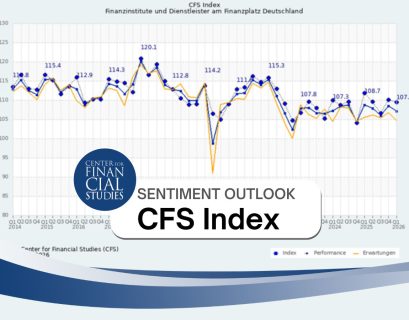
CFS Index in the third quarter of 2025
Source: CFS press release dated October 8, 2025