
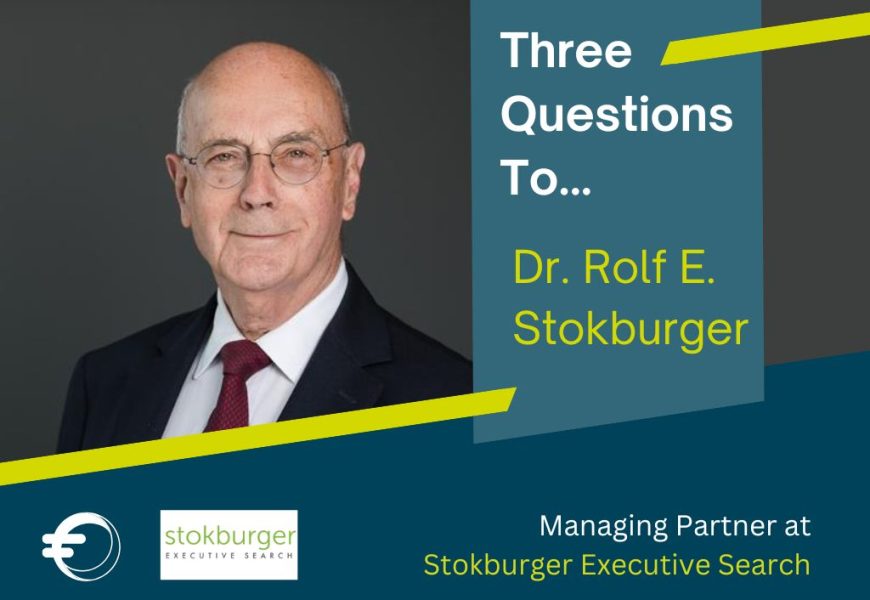
Is Frankfurt attracting international top talent in the financial sector?
Yes—and significantly more so than ten years ago. Frankfurt has evolved from a predominantly nationally focused banking hub into one of Europe’s most important centres for international finance talent.
The main reasons lie in its institutional strength. No other city in continental Europe brings together a comparable concentration of financial institutions: the European Central Bank, the Deutsche Bundesbank, EIOPA, the new Anti-Money Laundering Authority AMLA, and the European Systemic Risk Board (ESRB). In addition, Frankfurt is home to Deutsche Börse with Eurex and Clearstream, more than 150 foreign banks from around 50 countries, leading asset managers, insurance companies, law firms, and consulting firms.
This concentration creates an exceptionally deep labour market for specialists in banking supervision, risk management, capital markets, payments, sustainable finance, and asset management.
International rankings also confirm this development. In the Global Financial Centres Index (GFCI 39), Frankfurt ranks 15th worldwide, once again making it the highest-ranked financial centre within the European Union. Luxembourg follows in 16th place, Paris in 19th, and Amsterdam in 20th.
Its quality of life is equally noteworthy. In the Mercer Quality of Living Ranking, Frankfurt has for years been among the world’s most attractive cities for international professionals and their families, ranking well ahead of Paris, Milan, and London.
Frankfurt is therefore attracting international top talent primarily because of its professional expertise, its European institutions, its international connectivity, and its high quality of life.
Is Frankfurt attractive enough to remain competitive with Paris, Luxembourg, Milan, and Amsterdam in the long term?
As a city, unequivocally yes. As a business location within Germany, only to a limited extent.
Frankfurt’s real competitors today are no longer other German cities, but European financial centres that actively shape the competition for international talent.
Germany is one of the countries with the highest tax burden on highly qualified employees. At the same time, it has no special tax incentive scheme for international specialists and executives relocating to the country.
By contrast, Frankfurt’s main competitors pursue targeted talent strategies.
Paris
France offers one of Europe’s most attractive relocation schemes through its Régime des Impatriés. Under certain conditions, 30% of an employee’s remuneration is exempt from income tax. Additional tax benefits may apply to certain foreign investment income. The scheme is available for up to eight years.
Milan
Italy has reformed its impatriate regime but continues to offer substantial benefits. In principle, 50% of employment income is tax-exempt for qualified individuals relocating to Italy, and in certain family circumstances the exemption may be even higher. The incentive generally applies for five years.
Amsterdam
For many years, the Netherlands has operated one of Europe’s most successful instruments for attracting international professionals through its well-known 30% ruling. Although the scheme has recently been restricted, it remains an important factor in international recruitment.
Luxemburg
Luxembourg takes a particularly consistent approach. Under the impatriate regime in force since 2025, 50% of gross remuneration may be exempt from income tax. In addition, relocation expenses, housing costs, and international school fees may receive favourable tax treatment under certain conditions.
While these financial centres explicitly encourage international mobility, Germany largely taxes a specialist newly recruited from New York, Singapore, or London in the same way as an employee who has lived in the country for decades.
The difference can be illustrated using a sample calculation.
Illustrative Model Calculation for (2026)
Assumptions
- Gross annual salary: €250,000
- Single
- No church tax
- Regular employee
- Full eligibility for the respective impatriate regime
Location | Estimated annual net income | Advantage over Frankfurt |
Frankfurt, (standard taxation) | approx. 142.000 € | – |
Paris, (impatriate regime) | approx. 158.000 € | +16.000 € |
Amsterdam (30% ruling) | approx. 171.000 € | +29.000 € |
Milan (impatriate regime) | approx. 186.000 € | +44.000 € |
Luxembourg (impatriate regime) | approx. 194.000 € | +52.000 € |
The differences are substantial.
There are also other factors to consider. Germany provides only limited recognition of the actual costs associated with an international relocation. International school fees can be deducted for tax purposes only to a very limited extent. Other financial centres explicitly include such costs in their talent-attraction programmes.
What would need to happen for Frankfurt to become even more successful in attracting international top talent?
Frankfurt apart from the area around the central station—has largely done its homework. The main responsibility now lies with the federal and state governments.
The city already offers almost all the factors international top talent expects:
- a globally recognised financial centre,
- European supervisory institutions,
- excellent universities, including Goethe University and the Frankfurt School of Finance & Management,
- international schools,
- one of Europe’s largest aviation hubs,
- a high level of safety,
- short distances and a high quality of life.
The bottleneck is no longer at the municipal level, but in the national framework conditions.
Germany should therefore focus on three key areas.
First: introduce an internationally competitive impatriate regime modelled on those in France, Italy, Luxembourg or the Netherlands. It does not need to involve a complete tax exemption. Even a temporary tax incentive for genuinely mobile international specialists would significantly improve Germany’s competitiveness.
Second: improve the tax treatment of international families. International school fees, childcare costs and other additional expenses arising directly from a work-related relocation should—within clearly defined limits—either be tax-deductible or eligible for tax-advantaged reimbursement by employers.
Third: establish a fully international administrative process. Digital visa and residence procedures, English-speaking public authorities, central points of contact and faster recognition processes would immediately increase the attractiveness of the location.
Competition between financial centres has changed.
In the past, cities competed through stock exchanges, banks and office buildings.
Today, they compete for talent.
And talent does not compare salaries alone. International professionals also compare disposable net income, attractiveness for their families, the quality of schools, the speed of administrative procedures and long-term career prospects.


